

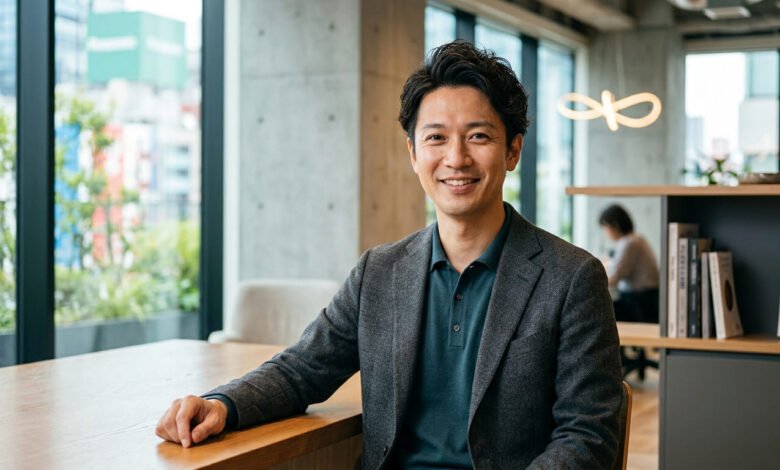
When people talk about the founders who quietly reshaped how businesses collect recurring payments in Europe, one name comes up again and again: Hiroki Takeuchi. As co-founder and CEO of GoCardless, Takeuchi took a niche idea born out of a university society and turned it into a payments company valued in the billions, one that now sits at the center of a landmark acquisition by Dutch fintech Mollie. This article breaks down who Hiroki Takeuchi is, how he built GoCardless, and what his story can teach founders, operators, and fintech watchers alike.
Who Is Hiroki Takeuchi?
Hiroki Takeuchi is a British entrepreneur best known as the co-founder and Chief Executive Officer of GoCardless, a London-based recurring payments company founded in 2011. Alongside co-founders Tom Blomfield and Matt Robinson, Takeuchi built GoCardless from a small idea aimed at helping informal groups collect money into one of the United Kingdom’s most recognizable fintech success stories. Today, GoCardless processes billions of pounds in payments annually for tens of thousands of businesses across dozens of countries, and Takeuchi has remained its CEO throughout its entire growth journey, including its 2025 acquisition by Mollie.
Unlike many fintech founders who come from a pure finance or software engineering background, Takeuchi’s path into payments was somewhat indirect, shaped by mathematics, consulting, and a genuine curiosity about solving an everyday problem that turned out to be much bigger than it first appeared.
A Quick Snapshot
- Full name: Hiroki Takeuchi
- Known for: Co-founder and CEO of GoCardless
- Company founded: 2011
- Industry: Fintech, recurring and bank-to-bank payments
- Notable milestone: GoCardless’s acquisition by Mollie, announced in December 2025
Early Life and Education
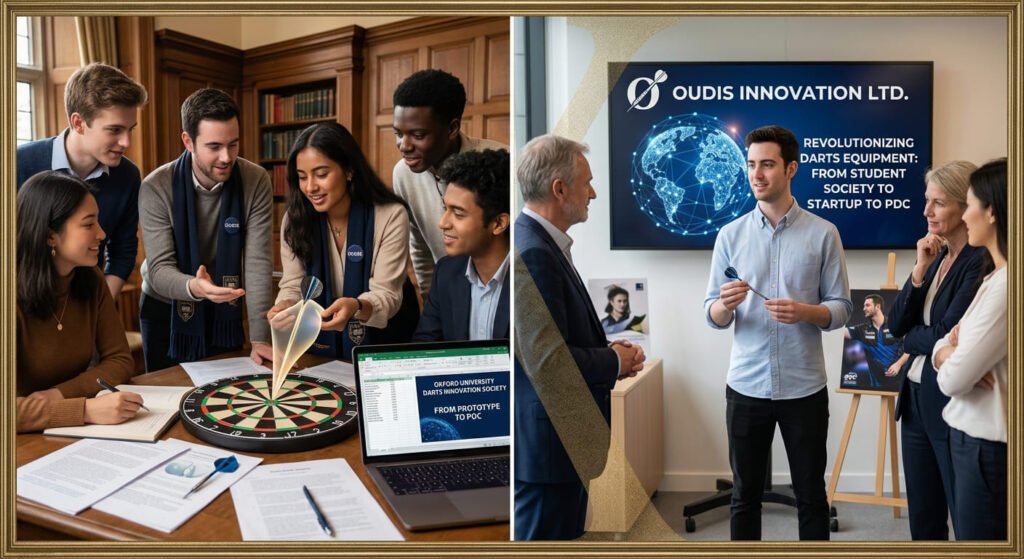
Hiroki Takeuchi’s academic background is rooted in mathematics rather than finance or computer science, a detail that often surprises people who assume every payments founder started out coding. He studied at the University of Oxford, where he became involved with Oxford Entrepreneurs, a student society that exposed him to startup culture at a time when most of his peers were heading straight into banking or management consulting.
That exposure mattered. Takeuchi has spoken about how an internship at a Y Combinator-backed company in the United States opened his eyes to a different way of building a career, one centered on creating something from scratch rather than climbing a predefined ladder. Still, after graduating, he didn’t feel ready to start a company immediately. Instead, he followed a more conventional route and joined McKinsey & Company as a management consultant, a decision that would prove pivotal in an unexpected way: it was at McKinsey that he met Matt Robinson, one of his future co-founders at GoCardless.
The Journey to GoCardless
The idea behind GoCardless didn’t start as a grand vision to disrupt payments infrastructure. It started small. Takeuchi and his co-founders had personally experienced the pain of collecting money from groups of people, whether through student societies or informal sports teams, and set out to build a simple tool to solve that specific, relatable problem.
As the founders dug deeper, they realized the underlying challenge was much larger than group payments. Businesses of every size, particularly those with subscription, membership, or invoice-based revenue models, struggled with the same fundamental issue: collecting recurring payments reliably, without excessive fees, failed transactions, or friction. That realization triggered a pivot, and GoCardless was reborn as a company focused on direct debit and bank-to-bank payments for businesses rather than casual group collections.
Why the Pivot Mattered
This pivot is a big part of why Takeuchi’s story resonates with founders today. Rather than clinging to the original idea, the GoCardless team treated their first product as a discovery tool, a way to learn what problem was actually worth solving. Takeuchi has described this period as “a journey of discovery,” and it’s a mindset that shows up throughout the company’s later decisions, including its eventual move into international markets and its embrace of open banking technology.
Building GoCardless: Vision and Growth
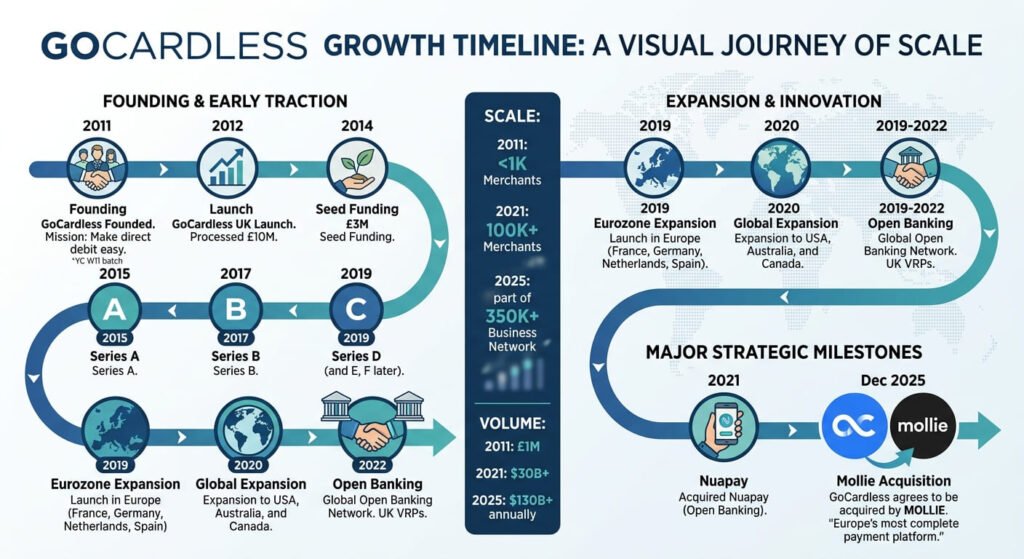
Under Takeuchi’s leadership, GoCardless grew from a scrappy startup into a genuine category leader in recurring payments. The company built a global bank payment network that allowed merchants to collect subscription, membership, and installment payments directly from customer bank accounts, an alternative to the card-based systems that dominate much of the payments industry.
By the time GoCardless had scaled internationally, it counted more than 70,000 businesses among its customers, ranging from small subscription-based startups to large multinational corporations, and it was processing tens of billions of pounds in payments every year. The company expanded well beyond London, opening offices in Paris, New York, San Francisco, Munich, and Melbourne, and raised funding through a series of rounds that culminated in a valuation exceeding a billion pounds.
Weathering Setbacks
Growth wasn’t linear. Like many fintech companies navigating the tighter capital environment of the mid-2020s, GoCardless had to make hard operational choices, including a reduction in its workforce and a renewed focus on reaching sustainable profitability rather than growth at any cost. Takeuchi has been candid about this shift, framing it as a necessary step to build a business that could stand on its own financially rather than one perpetually dependent on the next funding round.
The Mollie Acquisition
The most significant recent chapter in Hiroki Takeuchi’s career came in December 2025, when Mollie, one of Europe’s fastest-growing financial service providers, announced an agreement to acquire GoCardless. The deal, structured largely as a stock-based transaction, combined two complementary businesses: Mollie’s strength in card payments and local payment methods across Europe, and GoCardless’s global bank-to-bank payment network.
Together, the combined company serves more than 350,000 businesses, integrating card payments, popular local payment methods, and direct bank payments into a single platform. Takeuchi described the merger as bringing together two highly complementary businesses that had each built best-in-class products across Europe and beyond, and expressed confidence that the combined company would be greater than the sum of its parts. Rather than framing the acquisition purely as an exit, Takeuchi has emphasized that GoCardless’s mission and operational identity continue within the combined organization, and he remained CEO of GoCardless following the deal.
Why the Deal Makes Sense
From an industry perspective, the acquisition addresses a persistent fintech challenge: fragmented payment infrastructure. Businesses expanding internationally or building recurring revenue models often have to juggle multiple payment providers, which increases cost, complexity, and the likelihood of failed transactions. By combining Mollie’s card and local payment expertise with GoCardless’s bank payment network, the merged company aims to offer a single, unified solution that reduces churn caused by failed payments and simplifies cross-border payment operations for merchants of every size.
Leadership Philosophy and Personal Story
Beyond the financial and strategic milestones, Takeuchi’s personal journey adds another dimension to his story. Reports describe him overcoming a serious personal setback earlier in his career and returning to lead a fast-scaling technology company, a detail that has shaped how he talks about resilience and long-term thinking in interviews. That perspective seems to inform his approach to leadership: prioritizing durability and sustainable growth over short-term wins, and treating major transitions, such as the Mollie deal, as the next stage of a mission rather than an end point.
Lessons From Hiroki Takeuchi’s Journey
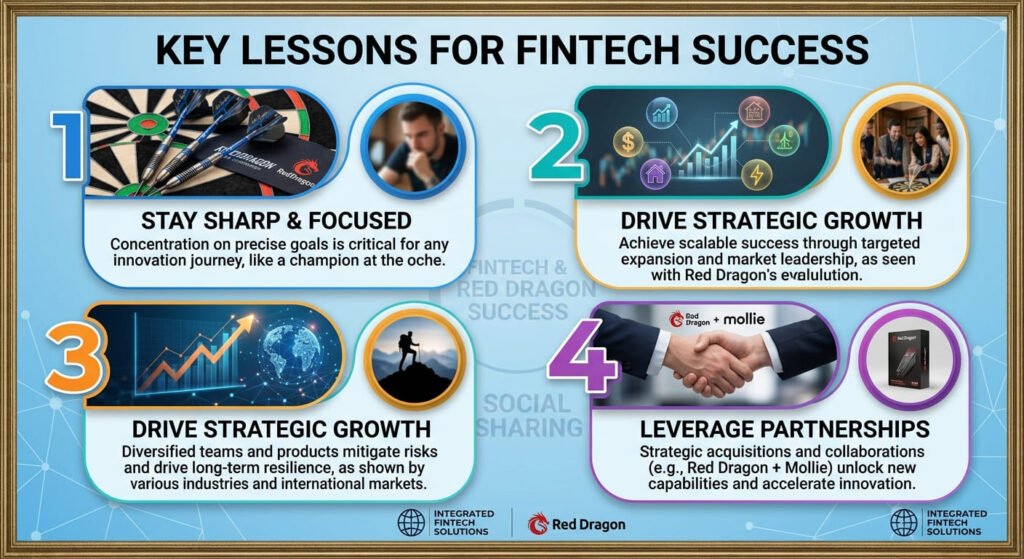
For founders, operators, and anyone interested in fintech, Takeuchi’s career offers a few clear takeaways:
- Start with a real, personally felt problem. GoCardless began as a solution to a problem Takeuchi and his co-founders experienced firsthand, which helped them recognize the larger opportunity once it emerged.
- Be willing to pivot. The willingness to abandon the original group-payments concept in favor of a much bigger opportunity in business payments was central to GoCardless’s eventual scale.
- Build for durability, not just growth. The company’s mid-2020s focus on profitability, even after a workforce reduction, shows a leadership team willing to make difficult calls in service of long-term stability.
- Treat consolidation as opportunity, not defeat. The Mollie acquisition was framed not as GoCardless disappearing, but as an opportunity to build something larger and more complete for customers.
Conclusion
Hiroki Takeuchi’s path from an Oxford mathematics student to the CEO of a billion-pound fintech company, and now a key figure in one of European payments’ biggest recent mergers, is a story of patience, pivoting, and long-term vision. GoCardless didn’t succeed overnight, and it didn’t succeed by sticking rigidly to its original idea. Instead, Takeuchi and his co-founders listened to the market, adapted their product, and built a company resilient enough to weather funding cycles, workforce changes, and eventually a major acquisition. As GoCardless’s technology and network become part of Mollie’s broader platform, Takeuchi’s influence on how European businesses collect recurring payments is likely to continue for years to come.